

Call-center:


Self-service market news
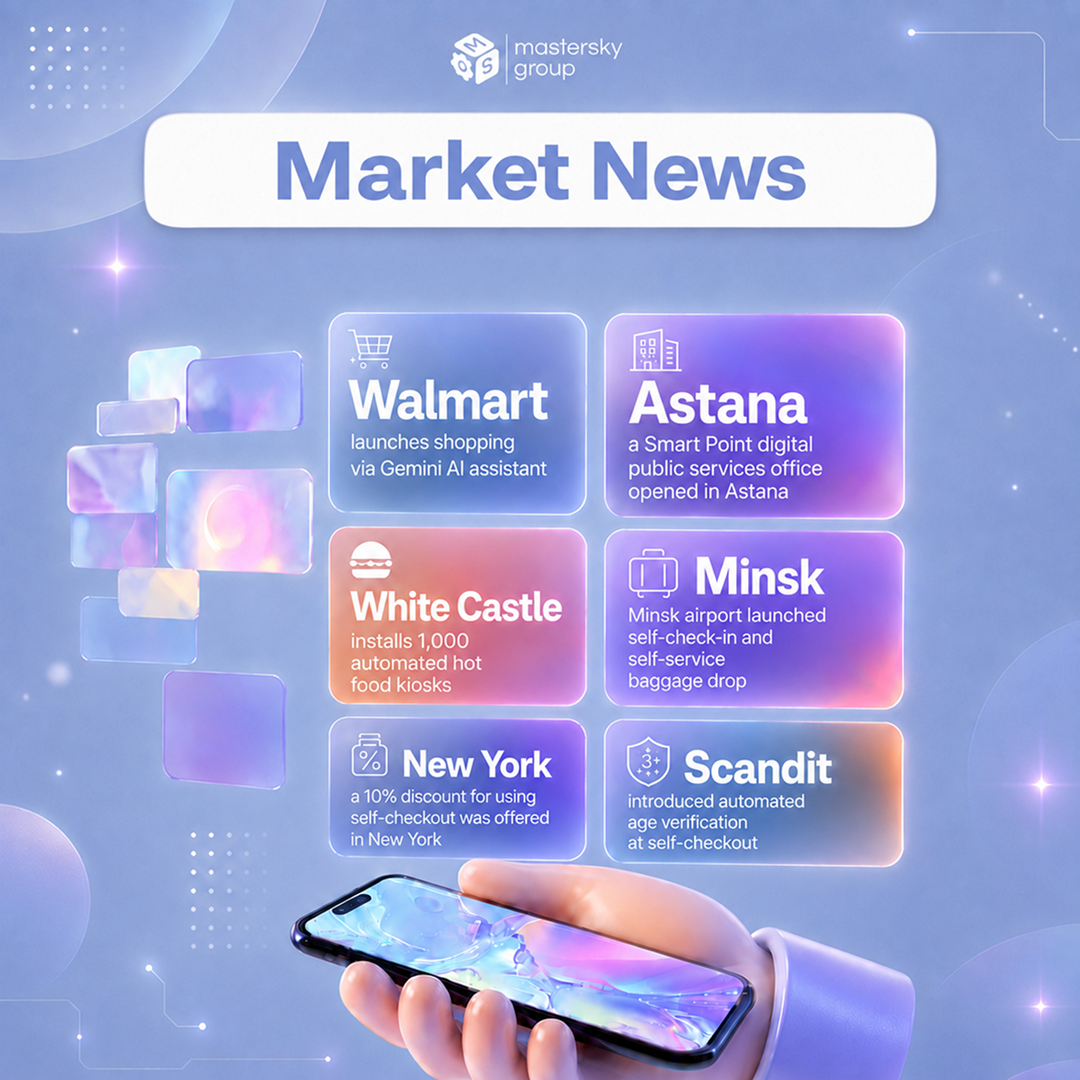
Self-Service Market News: How AI and Automation Are Changing Everyday Services
The self-service market continues to evolve rapidly. Artificial intelligence is becoming part of online shopping, government services are moving toward digital formats, and self-service kiosks are taking over more operations — from ordering food to age verification.
Here are several notable examples of how self-service technologies are being used in retail, public services, airports and other industries.
Walmart Expands AI-Powered Shopping
Walmart is expanding the use of artificial intelligence in online shopping. The new approach allows customers to interact with the Gemini AI assistant: describe what they need, receive product recommendations, add items to their cart and proceed with an order directly through the conversation.
This format can make shopping more personalized while shortening the customer journey from product search to purchase.
Government Services in Astana Move Toward Self-Service
A new Smart Point has opened in Astana, allowing visitors to access government services independently using digital tools and self-service terminals.
The format combines several service options:
- self-service terminals;
- consultations via an AI platform;
- application submission;
- collection of completed documents through parcel lockers.
This is another example of how automation can reduce the workload at traditional service centers and make public services more accessible.
White Castle Tests Automated Hot Food Kiosks
White Castle is developing automated kiosks capable of preparing and dispensing hot meals on demand.
These devices make it possible to sell freshly prepared food without operating a full-scale restaurant or requiring permanent on-site staff.
For the HoReCa sector, this is a promising direction: self-service technologies are gradually moving beyond ordering and payment to include the actual preparation and delivery of food.
Minsk Airport Introduces Self-Service Check-In and Baggage Drop
Minsk Airport has launched a service that allows passengers to check in for flights and drop off their baggage independently.
Travelers can complete key pre-flight procedures without having to visit a traditional staffed check-in counter.
Such solutions can help reduce queues, speed up passenger processing and optimize airport infrastructure.
New York Considers Discounts for Self-Checkout Users
One proposal in New York suggests giving customers a 10% discount when they scan and pay for their purchases independently using self-checkout.
The idea is based on a simple principle: part of the savings retailers receive from automated checkout could be passed on to customers in the form of a discount.
This approach could provide an additional incentive for customers to use self-service solutions in retail.
Scandit Automates Age Verification at Self-Checkout
Scandit has introduced a solution for automated age verification during self-checkout purchases.
The technology allows shoppers to quickly verify their age and continue the transaction without necessarily requiring assistance from a store employee.
For retailers, this is particularly relevant when selling age-restricted products. Automated verification helps preserve the convenience of the self-service experience while reducing the number of situations that require staff intervention.
Self-Service Is Becoming Part of Everyday Processes
Modern self-service technologies now extend far beyond conventional payment terminals. AI assistants, kiosks, parcel lockers, automated check-in systems and intelligent verification technologies are gradually creating a new model of customer service.
For businesses, the development of self-service solutions creates opportunities to accelerate processes, optimize staff workload and deliver a more convenient customer experience.
Mastersky Group follows the development of the automation market and regularly highlights key news, technologies and solutions shaping the future of self-service.